
14 Innovative Paper Clay Crafts Ideas to Inspire You
You can release your creativity with paper clay by sculpting whimsical animal figurines, textured wall art panels, and bas-relief floral canvases. Try making decorative bowls with lace impressions, dimensional art journal embellishments, or crafts that embed natural elements. Design your own beads and jewelry, carve intricate decorative tiles, and assemble playful dolls or articulated figures. Each project lets you experiment with texture, form, and mixed media—stick around if you’re enthusiastic for even more inventive paper clay inspiration.
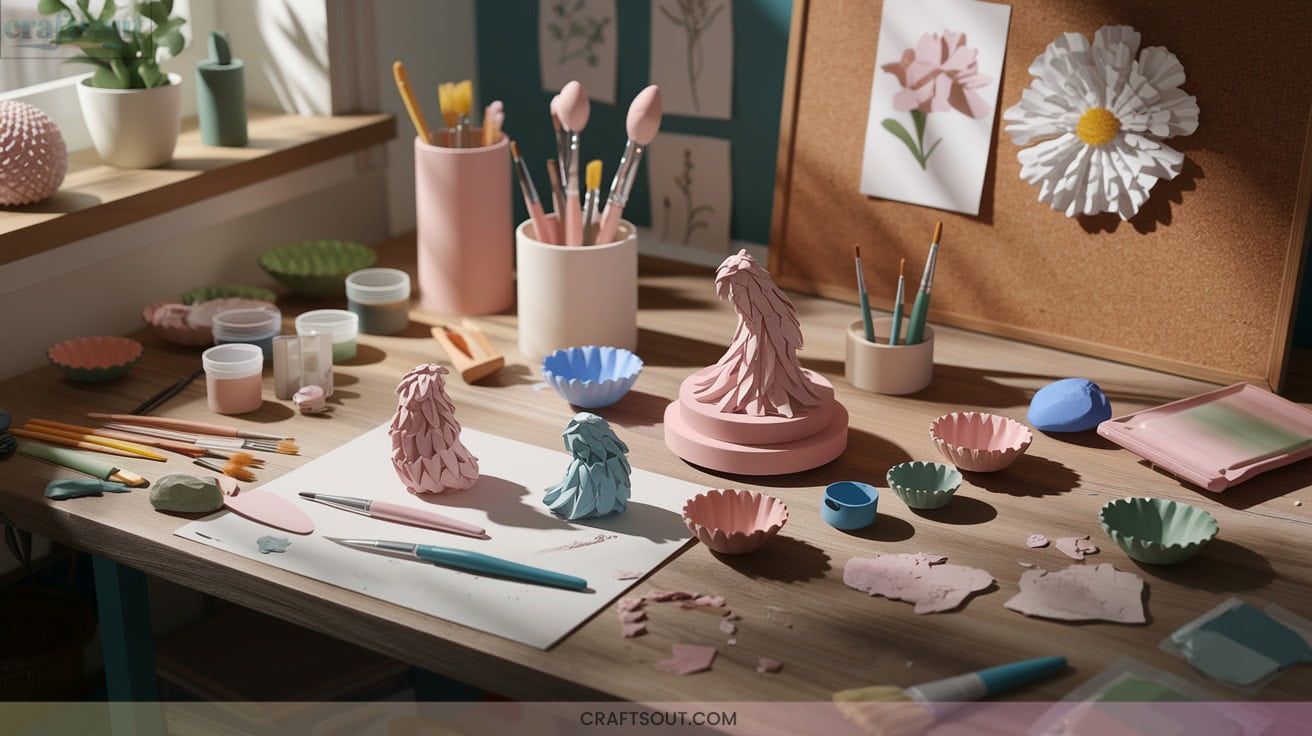

14 Innovative Paper Clay Crafts Ideas to Inspire You: You can release your creativity with paper clay by sculpting whimsical animal figurines, textured wall art panels, and bas-relief floral canvases. Try making decorative bowls with lace impressions, dimensional art journal embellishments, or crafts that embed natural elements. Design your own beads and jewelry, carve intricate decorative tiles, and assemble playful dolls or articulated figures.
1. Sculpting Whimsical Animal Figurines

Bring your imagination to life by sculpting whimsical animal figurines with paper clay—a versatile medium that’s perfect for playful creativity and detailed craftsmanship.
Start with an aluminum wire armature, bulking it out with foil or crumpled paper for structure and lightweight form.
- Layer homemade or artist-grade paper clay thinly, allowing each layer to dry to avoid cracks.
- Use tools—professional or improvised—for shaping, smoothing, and adding unique textures.
- Draw inspiration from fantasy or nature; exaggerate features or add anthropomorphic charm.
- Personalize with found objects, then paint vibrant details once dry.
Seal with acrylic varnish for a lasting, innovative finish.
2. Crafting Textured Wall Art Panels

Texture transforms ordinary wall art into tactile, dimensional masterpieces, and paper clay makes this process accessible even if you’re new to sculptural techniques.
Start by priming your chosen substrate—canvas, wood, or MDF—for ideal adhesion.
Knead commercial paper clay until smooth, or thoroughly mix homemade clay for consistency.
Experiment with imprinting lace, carving patterns, or layering clay for depth.
Apply wet clay directly with palette knives, or attach pre-formed, leather-hard shapes using PVA glue.
Allow slow, even drying to avoid cracks.
Sand to refine surfaces, then seal with acrylic medium.
Finally, paint your unique, textured panel to reveal bold visual impact.
3. Designing Bas-Relief Floral Canvases

Floral motifs offer endless inspiration for bas-relief canvases, letting you sculpt delicate petals, lush leaves, and intricate stems that rise elegantly from the surface.
Begin by prepping your canvas or wood panel with two coats each of gesso and gloss acrylic medium.
Roll air-dry paper clay between plastic sheets to a quarter-inch thickness, then cut or sculpt petals and leaves using clay tools or found objects.
Layer components for depth, referencing real flora for accuracy.
Once dry, adhere elements with strong glue.
Paint with thin acrylic washes, highlighting textures.
Finish with a protective varnish and thoughtful framing for gallery-worthy impact.
4. Making Decorative Bowls With Lace Impressions

Lace transforms an ordinary slab of paper clay into a bowl that’s both delicate and striking.
Start by kneading your clay until it’s pliable, then roll it out on wax paper to about 1/4 inch thick. Press textured lace firmly into the surface with a rolling pin, then peel it away to reveal the intricate pattern.
Cut a circle, drape it over a foil-covered bowl mold, and smooth the edges. Let air-dry clay set partially before unmolding, then dry completely.
Finish by sanding, painting, or sealing for a modern, tactile vessel that’s as artful as it’s innovative.
5. Creating Dimensional Art Journal Embellishments

Dimensional embellishments made from paper clay instantly elevate your art journal, adding sculptural interest without unnecessary weight.
Begin by kneading paper clay until smooth; roll it thin for easy layering or press it into silicone molds for intricate shapes.
Add texture with stamps or embossing folders dusted with cornstarch.
Sculpt freehand for organic details, or build onto chipboard for stability.
Once dry, paint embellishments with acrylics, highlight textures with dry brushing, and accent with pigment powders or metallic waxes.
Seal for longevity.
Affix finished pieces to your pages using strong craft glue, integrating them seamlessly into your mixed-media compositions.
6. Shaping Unique Masks for Display

Ever wondered how to capture expressive character and bold form in a mask that’s truly one of a kind?
Start by shaping an armature using wire mesh, crumpled newspaper, or even a balloon—tailor your base to the vision you imagine.
Layer paper clay over your structure, blending edges with dampened fingers for seamless adhesion.
Sculpt dramatic features with small clay additions, refining details using the backs of spoons or filbert brushes.
Once dry, sand carefully and prime with gesso for a flawless finish.
Paint with acrylics, add innovative embellishments, and seal—your bold, display-worthy mask is ready to inspire.
7. Constructing Lightweight Mobiles and Hanging Sculptures

Aerial artistry takes center stage when you craft mobiles and hanging sculptures from paper clay, transforming humble materials into kinetic displays.
Transform paper clay into kinetic displays—elevate your creativity with mobiles and sculptures that dance in the air.
Start with lightweight armatures—tinfoil for volume, aluminum wire for structure, or cardboard for flat pieces—and cover with thinly rolled paper clay.
Imprint textures, add holes or loops for hanging, and let each component dry thoroughly.
Test balance as you connect pieces to hoops or pipes using yarn, fishing line, or wire.
Adjust placement for visual harmony.
Finish by sanding, painting, and sealing all surfaces to safeguard from moisture.
You’ll create innovative, floating artworks that captivate with movement and form.
8. Forming Personalized Gift Tags and Ornaments

Transform ordinary paper clay into bespoke gift tags and ornaments that celebrate the personal touch.
Knead your clay until smooth, then roll it out on parchment to 1/8–1/4 inch thick.
Cut shapes with cookie cutters or custom templates.
Press in stamps or natural textures, or embed small beads for interest.
Personalize with alphabet stamps, remembering to reverse letters, and create hanging holes before drying.
Air-dry thoroughly, flipping pieces for evenness, then sand edges.
Paint, gild, or stamp dried surfaces for bold effects.
Finish with varnish, and thread ribbon or twine for a polished, innovative flourish on every creation.
9. Building Miniature Fairy Houses and Accessories

Once you’ve mastered personalized tags and ornaments, paper clay opens the door to enchanting miniature worlds.
Start by crafting sturdy fairy house bases from cardboard, toilet rolls, or even balloons, layering them with paper mache for strength.
Smooth paper clay over your form, working in thin layers and allowing each to dry thoroughly.
Sculpt whimsical windows, doors, and mushrooms while the clay is damp, or carve crisp details after drying.
Elevate realism with textured surfaces—simulate wood grain or stone using carving tools.
Finish with acrylic paints, washes, and dry-brushing, then seal.
Create matching accessories—tables, bowls, faux ironwork—for immersive scenes.
10. Experimenting With Mixed Media Vessels

Why limit your vessels to just one material when paper clay thrives in creative company?
Let your vessels break boundaries—paper clay comes alive when it mingles with unexpected materials and imaginative textures.
Start by shaping dynamic forms over wire mesh, cardboard, or even upcycled glass jars for a unique base.
Layer paper clay over textiles, wood, or found objects—think buttons or gears—for tactile contrast and visual intrigue.
Join sections using slip, or experiment with unconventional fastening like stitching or staples for an edgy assemblage look.
Once dry, refine surfaces with sanding, then finish with acrylics, encaustic wax, or collage elements.
Mind drying rates and strength—paper clay grips armatures well, but balance materials for structural integrity and innovation.
11. Embedding Natural Elements for Nature-Inspired Crafts

Curious how to infuse your paper clay projects with the textures and beauty of the outdoors?
Start by gathering clean, dry leaves, twigs, pebbles, or shells—always source ethically.
Condition your clay well and work on a protected surface.
For bold effects, press natural items into the damp clay or wrap clay around sturdier elements like pebbles for structural strength.
Use slip as adhesive, or create striking impressions by pressing and removing textured finds.
Remember, drying causes shrinkage, so account for it in your designs.
Once fully dry, sand and seal for durability.
Let nature’s forms elevate your innovative creations.
12. Designing Custom Beads and Jewelry Components

After exploring ways to incorporate nature’s textures into your paper clay creations, it’s time to focus on designing unique beads and jewelry components.
Paper clay is lightweight, sustainable, and easily shaped—perfect for innovative accessories.
Lightweight and eco-friendly, paper clay invites endless creativity in crafting one-of-a-kind, wearable accessories and jewelry pieces.
Shape beads by rolling, molding, or using cutters.
Always create stringing holes before the clay dries, adjusting size for findings.
Add texture with lace or burlap impressions, or experiment with marbling and color blocking.
Once dry, sand, paint, and seal for durability.
Assemble your components into wearable art using standard jewelry findings.
- Shape beads with molds or cutters
- Make holes before drying
- Impress textures
- Paint and seal thoroughly
- Assemble with quality findings
13. Carving Intricate Decorative Tiles

Transforming paper clay into intricate decorative tiles opens up a world of personalized design and tactile artistry.
Begin by rolling your clay to a uniform 1 cm thickness on a cloth, then transfer your chosen design using tracing paper and a sharp tool.
Let the tile reach a leather-hard stage for clean, precise carving—use X-Acto knives or dental picks for detail.
Carve deliberately, angling cuts toward the negative space.
Refine with sandpaper and burnish for shine.
Dry tiles flat, using gentle weights, and finish with acrylic sealer.
This process lets you translate innovation directly into your own custom decorative surfaces.
14. Assembling Playful Dolls and Articulated Figures

Ever wondered how to bring your characters to life with expressive gestures and movable limbs?
Start with a sturdy armature—wire, foil, or cardboard—for structure.
Build up paper clay in thin layers, sculpting heads over removable forms for hollow shapes.
For joints, design with precision: ball-and-socket or hinges crafted from smooth, even clay spheres.
Attach limbs to cloth or clay bodies using button joints or wet-to-dry bonding.
Refine surfaces, sand when dry, and detail with sculpting tools.
- Use armatures for support
- Design functional ball joints
- Attach limbs with button jointing
- Refine and sand dried surfaces
- Finish with paint or sealant
Frequently Asked Questions
How Do I Store Unused Paper Clay to Prevent It From Drying Out?
To keep your unused paper clay fresh, wrap it tightly in plastic wrap, seal it in a double-bagged Ziploc with a damp towel, then stash it in an airtight container. Store cool and dark—don’t let innovation dry out!
Can I Waterproof Paper Clay Creations for Outdoor Use?
Think of sealants as the guardian shields for your paper clay—without them, your creations weather and fade. You’ll need to fully cure, then coat all surfaces with polyurethane, epoxy, or acrylic for true outdoor resilience.
What’S the Best Way to Repair Cracked or Broken Paper Clay Pieces?
To repair cracked or broken paper clay, score and moisten edges, then use paper clay slip (clay plus toilet paper pulp). For seamless joins, reinforce with wet-to-dry joining or magic water. Let dry thoroughly before finishing.
Is Homemade Paper Clay as Durable as Store-Bought Varieties?
Think of durability like baking bread—homemade paper clay’s strength depends on your recipe’s precision, while store-bought offers uniform results. If you experiment, you can match or even exceed commercial durability, but consistency takes practice and careful sealing.
How Long Does It Take for Paper Clay to Fully Dry?
You’ll usually need 24–72 hours for paper clay to dry, but thickness, humidity, and airflow all matter. For faster results, use thin layers, gentle heat, or a fan—just rotate your piece for even, crack-free drying.
Conclusion
Just like a gardener plants seeds and delights in every bloom, every paper clay idea you try will grow your creativity. Did you know even master sculptors start with simple shapes? With these 14 crafts, you’re not just making art—you’re nurturing your imagination.
So, roll up your sleeves and let your hands lead; your next masterpiece might be just a pinch, press, or paint away. Let your creativity take root and flourish!


